Body Shape Types
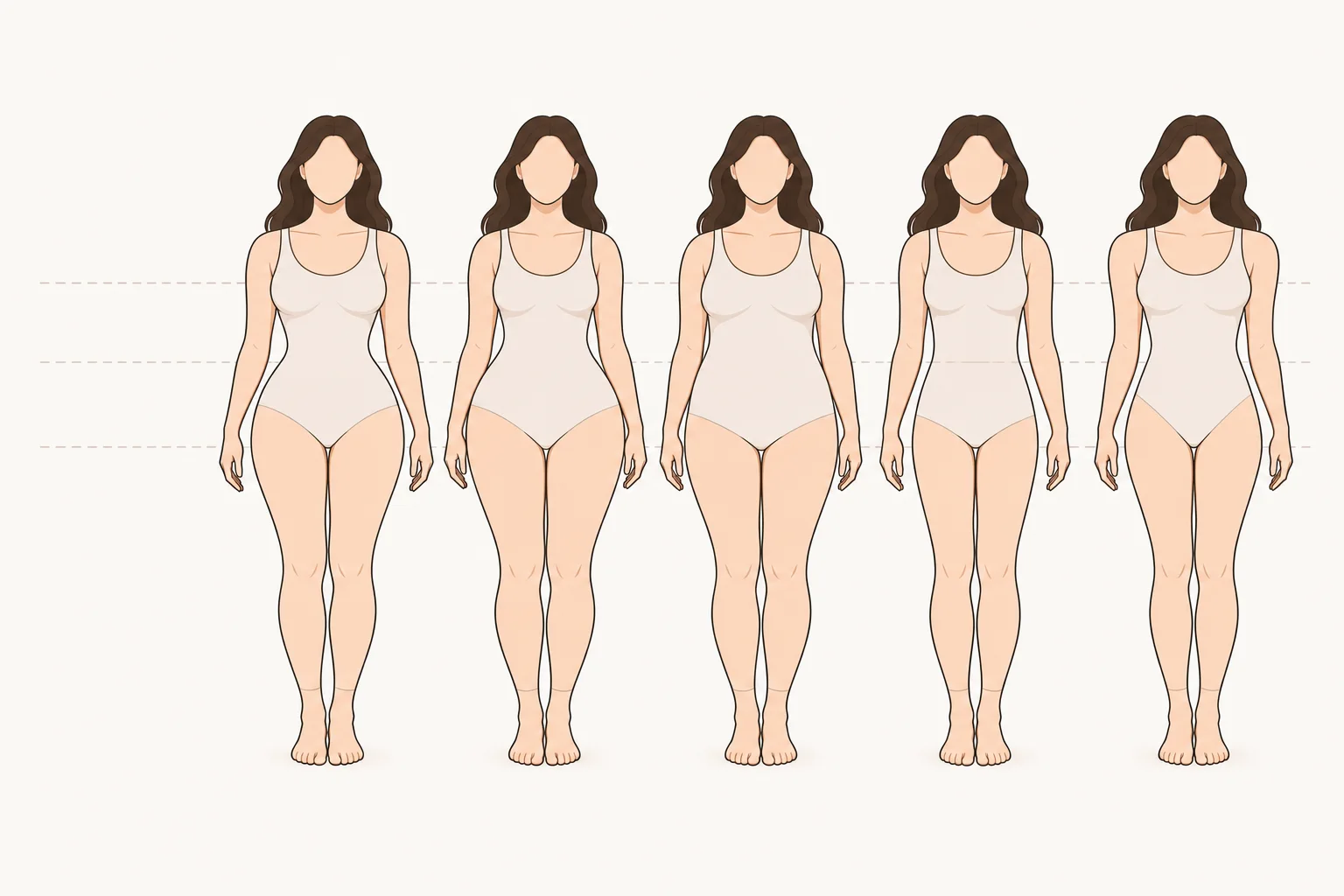
Explore each body shape
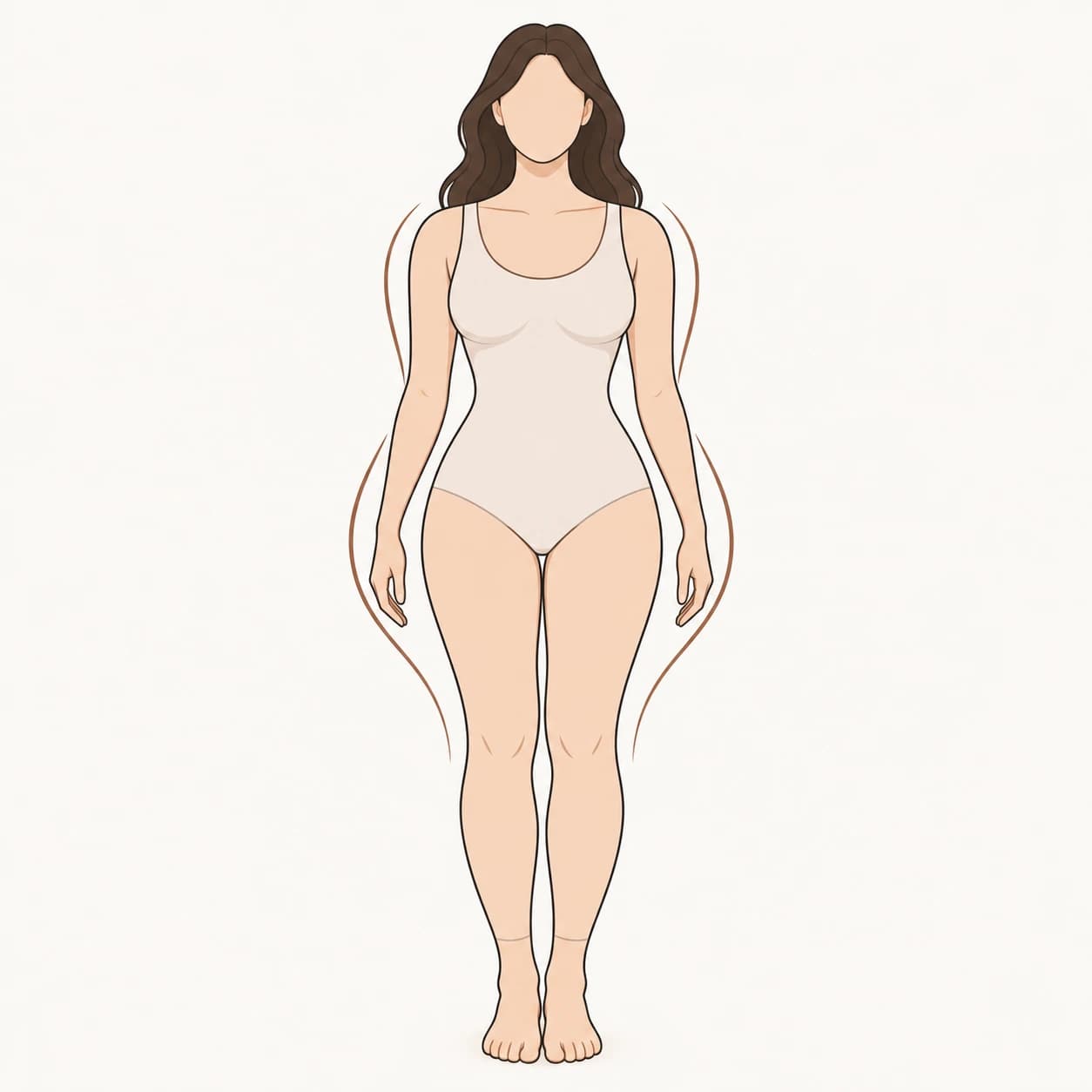
Hourglass body shape
An hourglass body shape describes bust and hip measurements that are close to each other, with a waist that is noticeably smaller than both.
Read the hourglass guide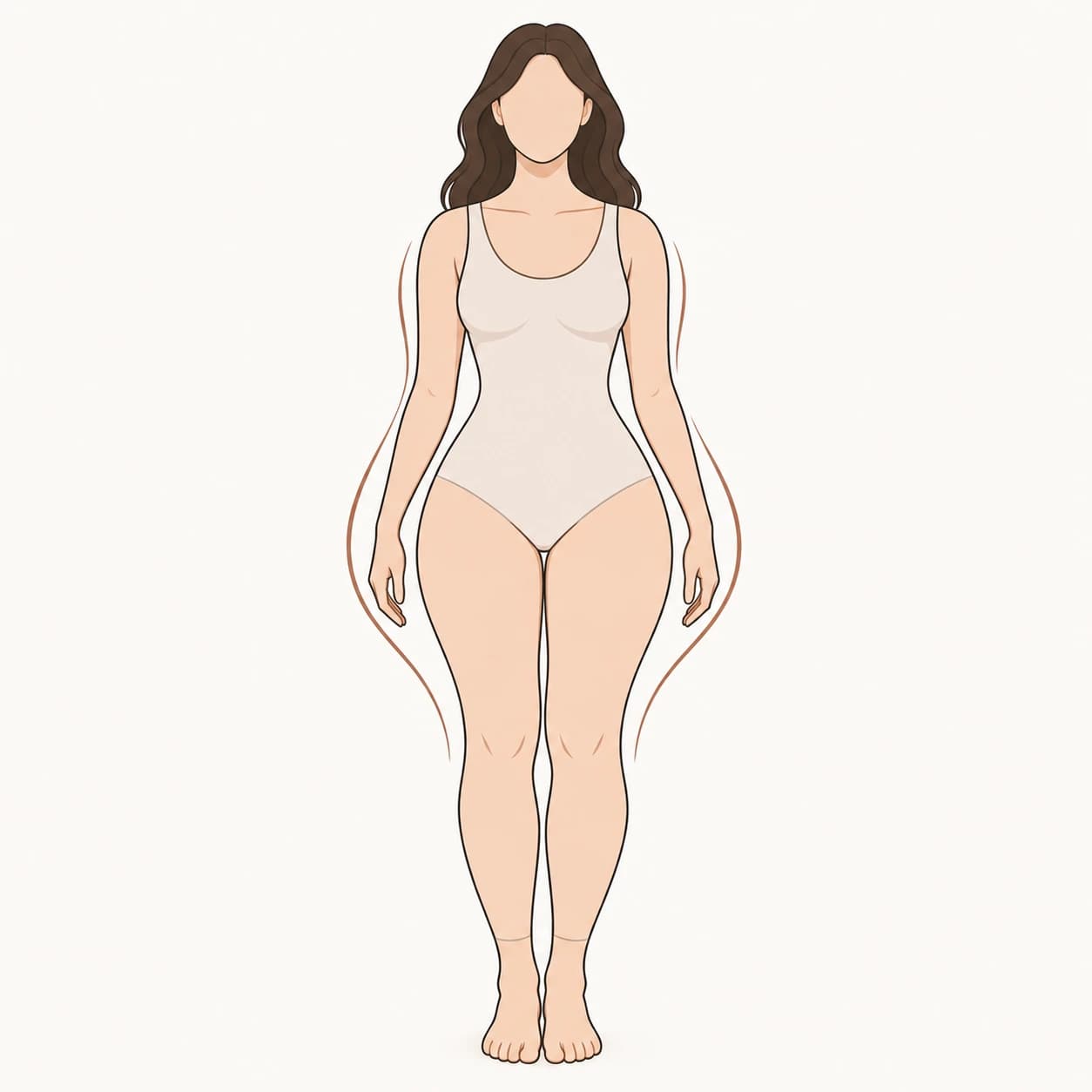
Pear body shape
A pear body shape — also called a triangle or spoon shape in some systems — describes hips that are noticeably larger than the bust.
Read the pear guide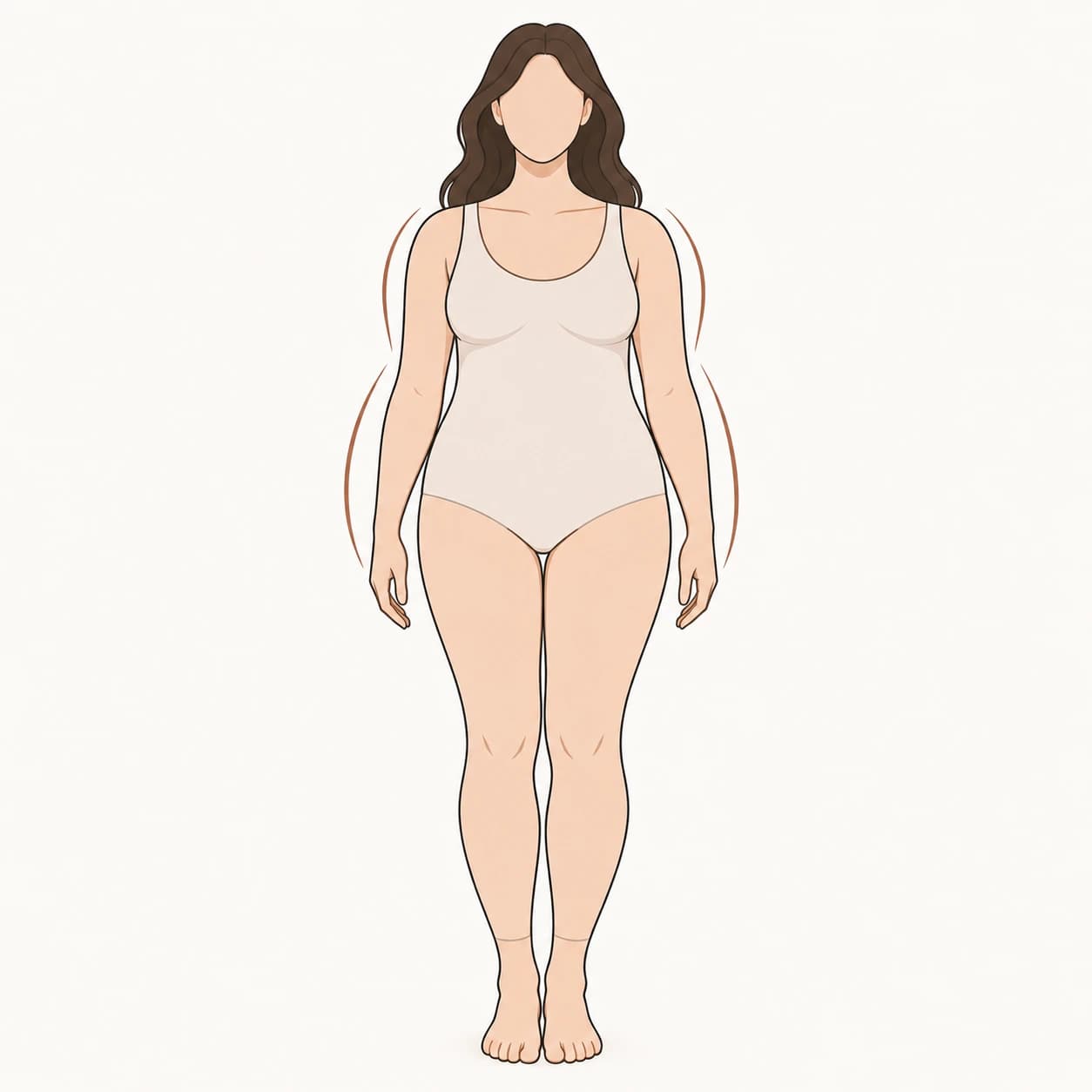
Apple body shape
An apple body shape — sometimes called round or oval — describes a waist measurement that is about the same as, or larger than, both the bust and the hips.
Read the apple guide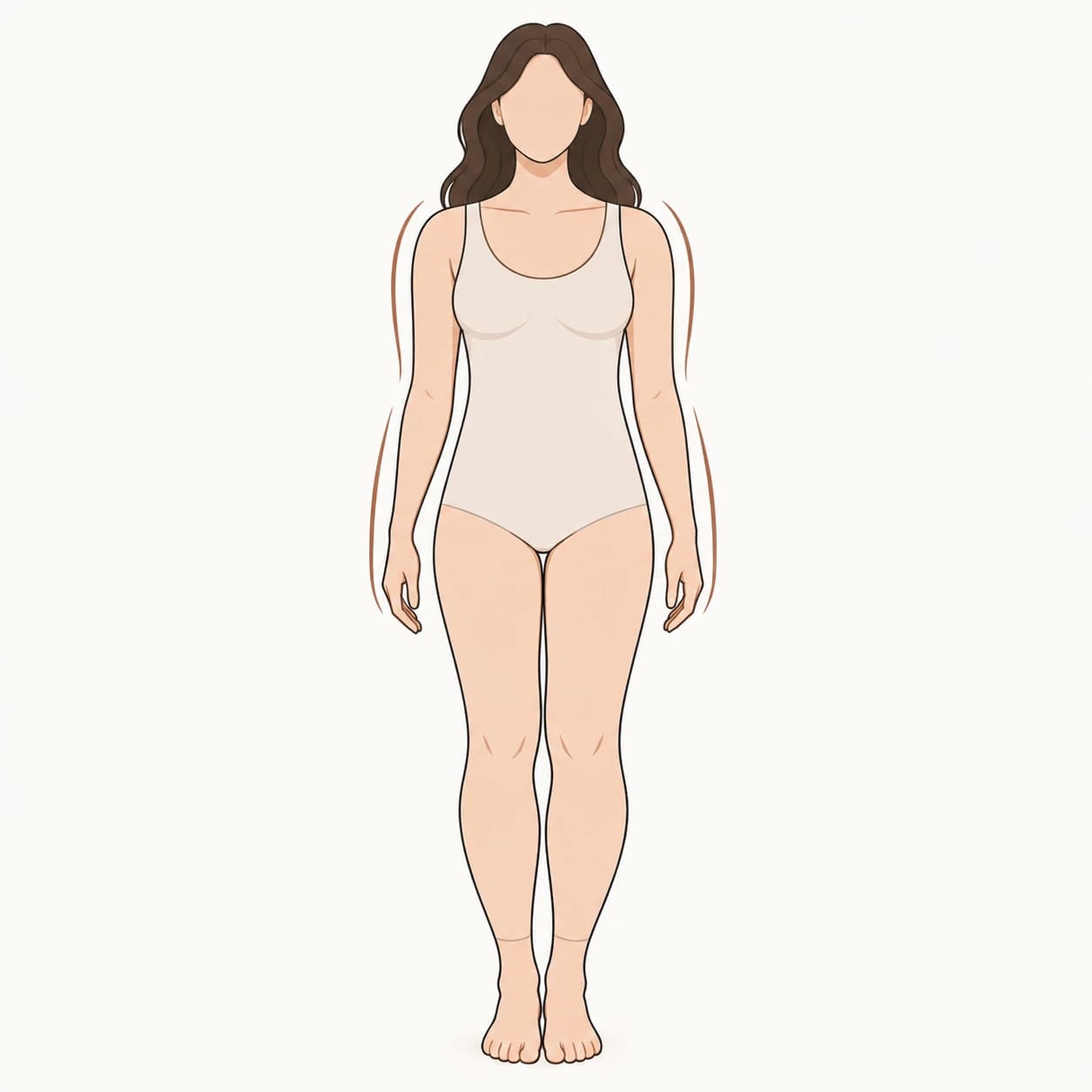
Rectangle body shape
A rectangle body shape — also called straight, column or banana — describes bust and hips of similar size, with a waist that is smaller but not dramatically so.
Read the rectangle guide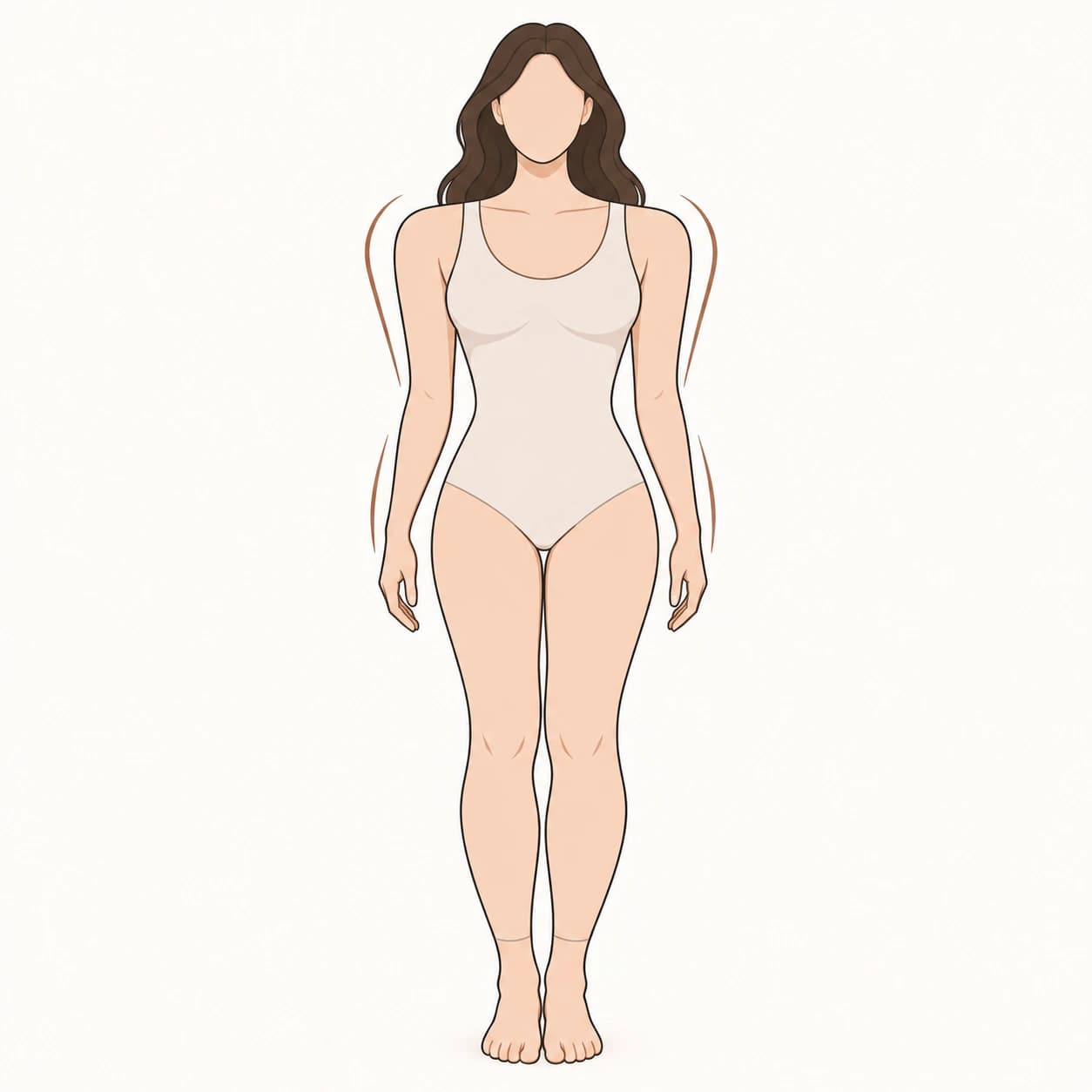
Inverted Triangle body shape
An inverted triangle body shape describes an upper body — measured here at the bust — that is noticeably larger than the hips.
Read the inverted triangle guide
Side-by-side comparison
| Shape | Bust vs hips | Waist |
|---|---|---|
| Hourglass | Balanced | Clearly defined |
| Rectangle | Balanced | Moderately smaller |
| Pear | Hips larger | Any (often defined) |
| Inverted Triangle | Bust larger | Any |
| Apple | Either | Close to or larger than both |
The exact rules
The calculator checks these rules in order and returns the first match.
| Order | Result | Rule |
|---|---|---|
| 1 | 1. Apple | Waist is within 2 in (5.1 cm) of both bust and hips, or larger than them. |
| 2 | 2. Hourglass | Bust and hips differ by less than 3.6 in (9.1 cm), and the waist is at least 9 in (22.9 cm) smaller than the bust or 10 in (25.4 cm) smaller than the hips. |
| 3 | 3. Pear | Hips are at least 3.6 in (9.1 cm) larger than the bust. |
| 4 | 4. Inverted Triangle | Bust is at least 3.6 in (9.1 cm) larger than the hips. |
| 5 | 5. Rectangle | None of the above: bust and hips are balanced and the waist is smaller, but not by enough for Hourglass. |
Why other guides list more shapes
Some systems use eight or more categories, adding shapes such as spoon, diamond, top hourglass and bottom hourglass. More categories can describe some bodies more precisely, but they need extra measurements (such as the high hip) and create more boundaries where a small measuring difference changes the result.
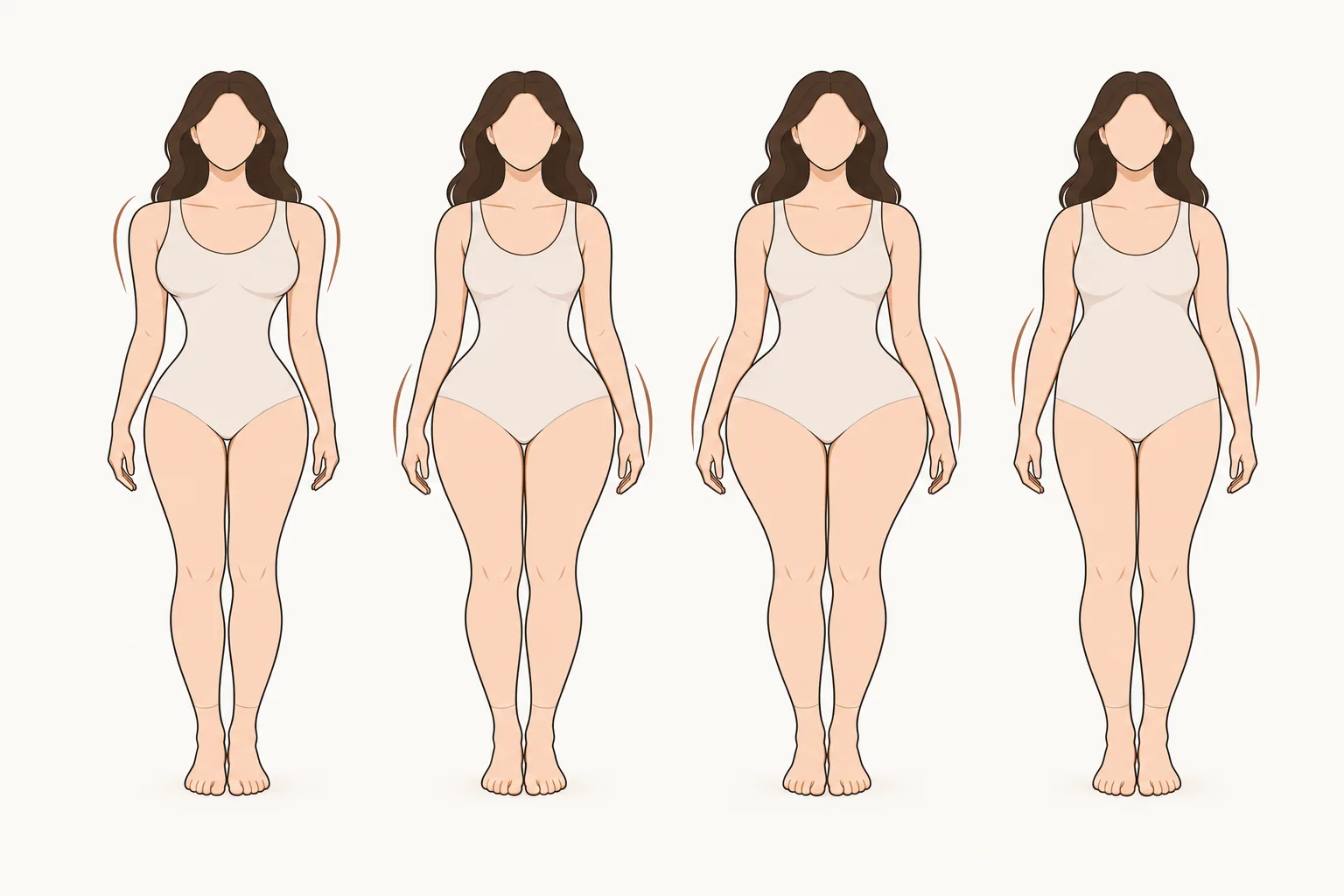
We use five categories because they can be identified reliably from three measurements most people can take at home. When your measurements fit a common sub-type, the calculator mentions it in a note.
Ready to check yours? Use the body type calculator or first read how to take your measurements.