Female Body Shape Calculator
Measuring for a man? Use the male body shape calculator.
The five female body types
Women’s body shape systems describe how the bust and hips compare and how defined the waist is. Each guide explains the measurement pattern, worked examples and common myths.
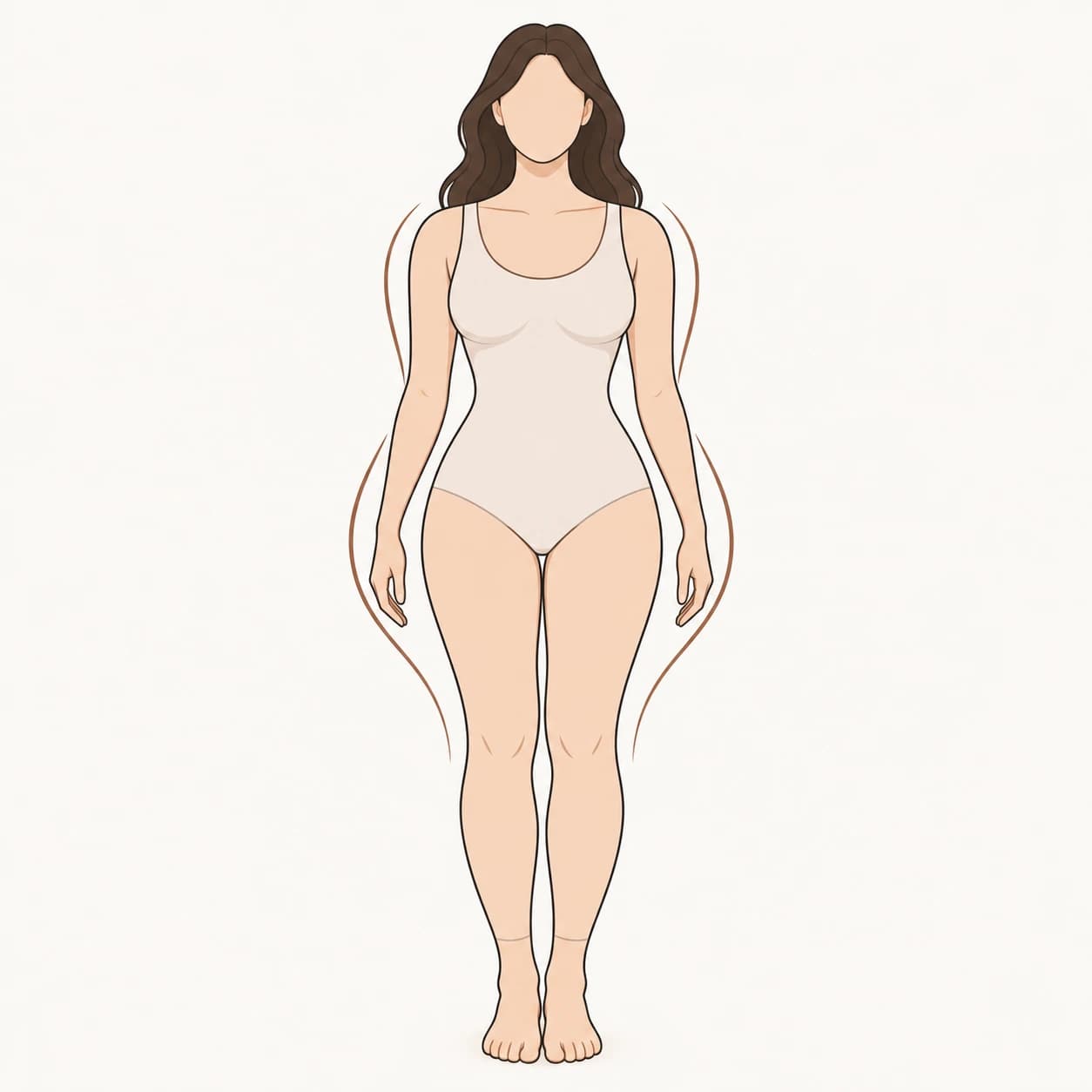
Hourglass body shape
An hourglass body shape describes bust and hip measurements that are close to each other, with a waist that is noticeably smaller than both.
Read the hourglass guide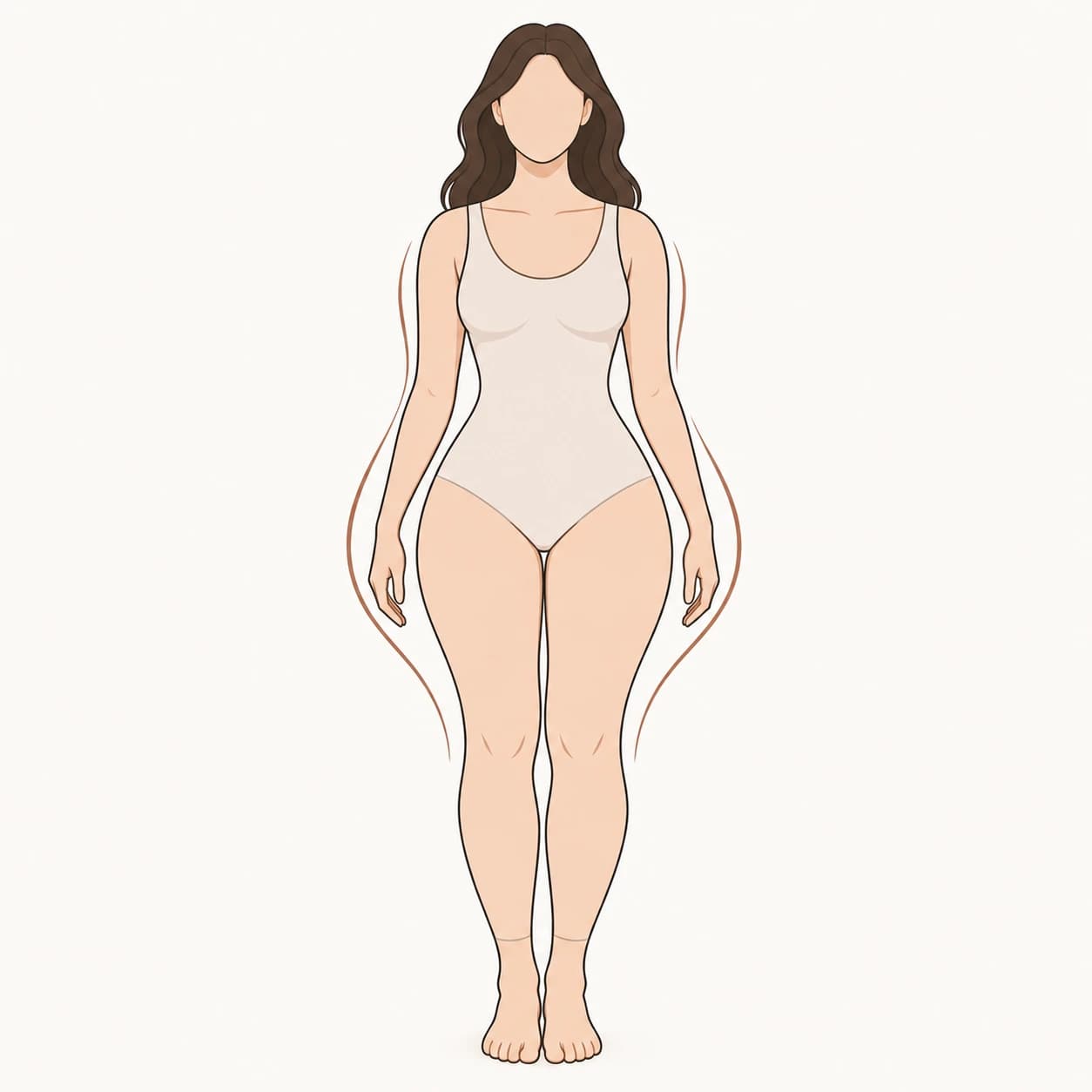
Pear body shape
A pear body shape — also called a triangle or spoon shape in some systems — describes hips that are noticeably larger than the bust.
Read the pear guide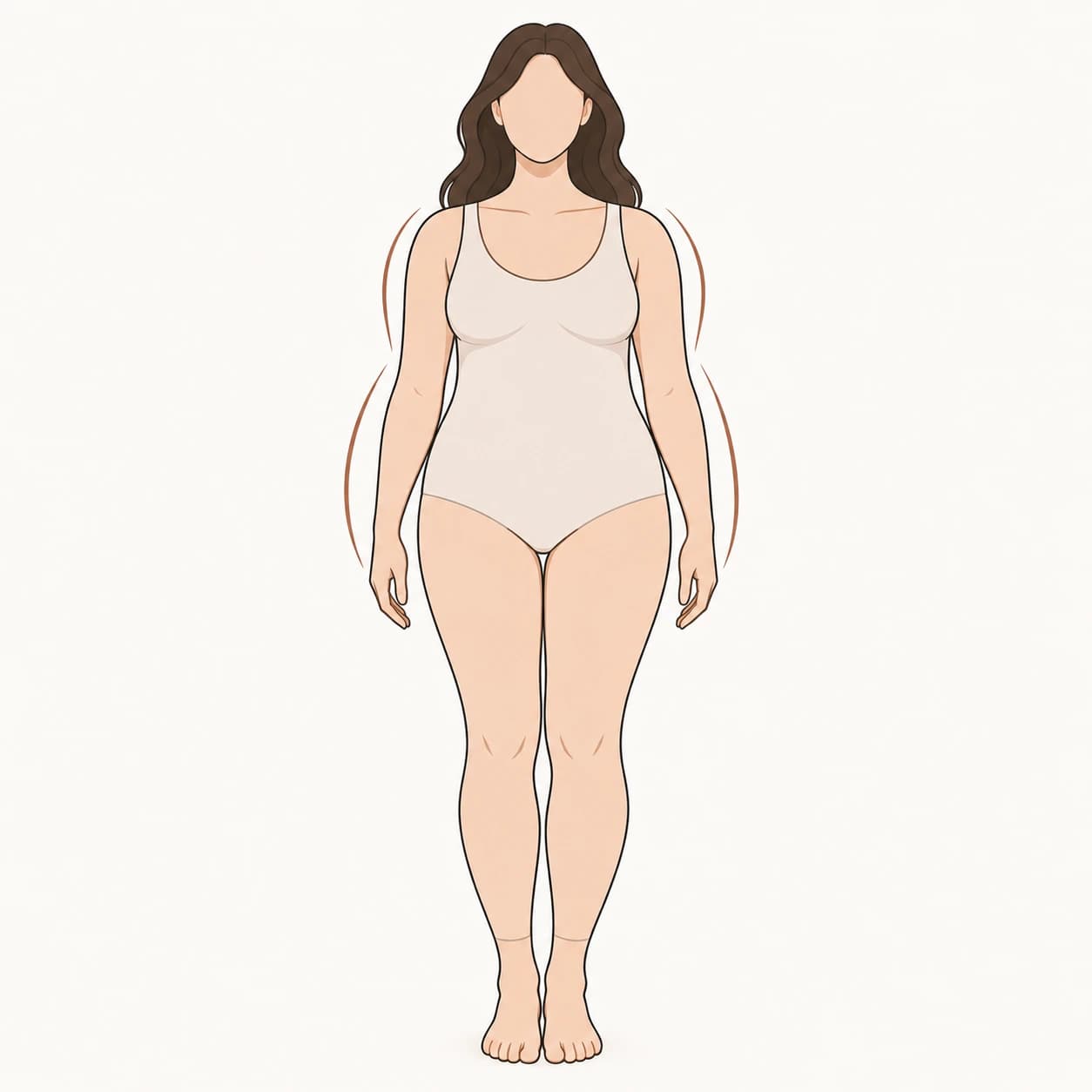
Apple body shape
An apple body shape — sometimes called round or oval — describes a waist measurement that is about the same as, or larger than, both the bust and the hips.
Read the apple guide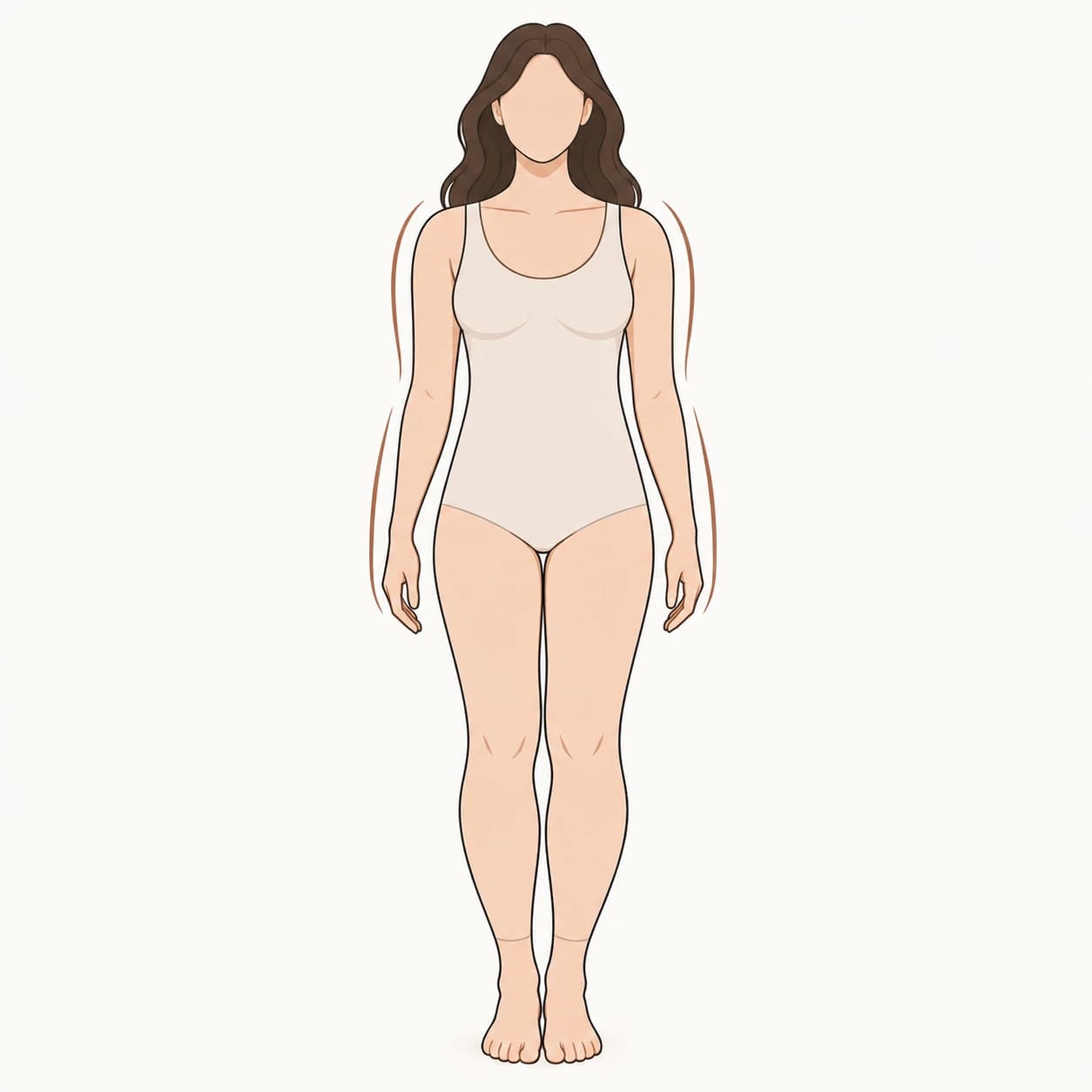
Rectangle body shape
A rectangle body shape — also called straight, column or banana — describes bust and hips of similar size, with a waist that is smaller but not dramatically so.
Read the rectangle guide
Inverted Triangle body shape
An inverted triangle body shape describes an upper body — measured here at the bust — that is noticeably larger than the hips.
Read the inverted triangle guide
How the female body shape calculator works
The rules are adapted from the Female Figure Identification Technique (FFIT), a method developed in apparel research to sort women’s figures for clothing fit. The calculator checks the rules below in order and returns the first match, then tells you if a small measuring difference would change it.
| Order | Result | Rule |
|---|---|---|
| 1 | 1. Apple | Waist is within 2 in (5.1 cm) of both bust and hips, or larger than them. |
| 2 | 2. Hourglass | Bust and hips differ by less than 3.6 in (9.1 cm), and the waist is at least 9 in (22.9 cm) smaller than the bust or 10 in (25.4 cm) smaller than the hips. |
| 3 | 3. Pear | Hips are at least 3.6 in (9.1 cm) larger than the bust. |
| 4 | 4. Inverted Triangle | Bust is at least 3.6 in (9.1 cm) larger than the hips. |
| 5 | 5. Rectangle | None of the above: bust and hips are balanced and the waist is smaller, but not by enough for Hourglass. |
Measuring tips for women
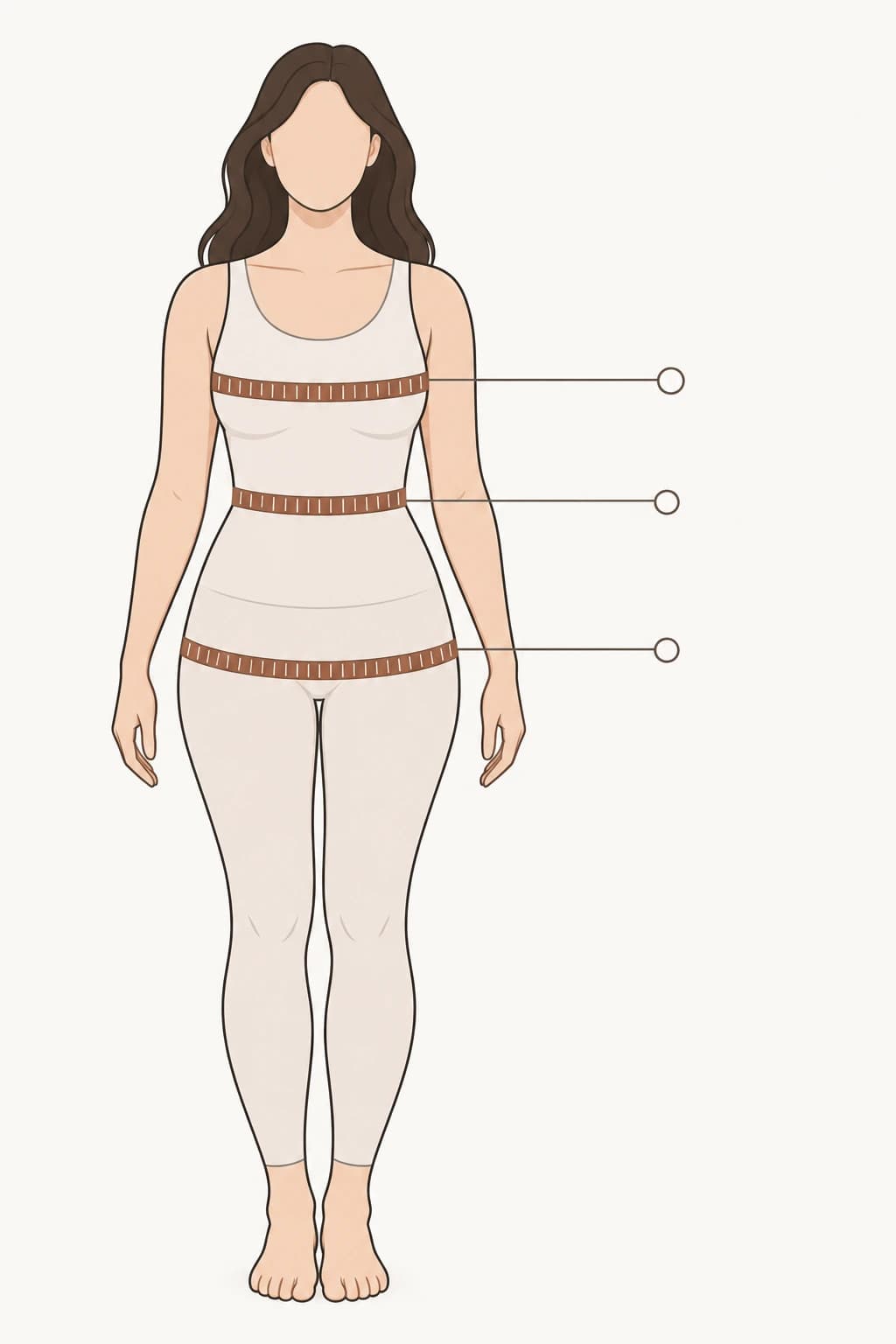
Wear the same bra each time
Padded, push-up, minimizing and sports bras all change the bust measurement. A well-fitting, non-padded bra gives the most consistent reading.
Find your natural waist
Bend to one side — the crease that forms is your natural waist. It is usually above the belly button, not where low-rise trousers sit.
Measure the seat, not the hip bones
The hip measurement goes around the fullest part of the hips and seat. Measuring too high is the most common reason a pear result turns into rectangle.
Re-measure after big changes
Pregnancy, weight change, training and age can all shift proportions over time. A result describes your measurements today, not a fixed category.
Female body shape calculator FAQ
What does a female body shape calculator do?
It compares your bust, waist and hip measurements with each other and sorts the pattern into a body shape category — hourglass, pear, apple, rectangle or inverted triangle — with an explanation of why.
Is this the same calculator as the one on the homepage?
Yes. Both use the same rules for women’s measurements. This page adds measuring tips and information aimed specifically at women.
Does my bra size affect the result?
Your bra size doesn’t, but the bra you wear while measuring does. Padded or minimizing bras change the bust measurement, which can change the result if you are close to a threshold.
Can my body shape change?
Yes. Proportions can shift with weight change, pregnancy, training and age. Your result reflects the measurements you enter today.
Why don’t I see shapes like spoon or diamond?
This calculator uses five broad categories that can be identified from three measurements. Some systems add more shapes that need extra measurements, such as the high hip. Your result includes a note when it matches a common sub-type.
I’m measuring for a man. Which calculator should I use?
Use the male body shape calculator. It asks for shoulders, chest, waist and hips and uses categories designed for male proportions.
More questions about measuring and results are answered in the full body shape FAQ.
Compare your result
See all five shapes side by side, or read how the categories are separated.
References
- Simmons, K., Istook, C. L., & Devarajan, P. (2004). Female Figure Identification Technique (FFIT) for apparel. Part I: Describing female shapes. Journal of Textile and Apparel, Technology and Management, 4(1), 1–16.
- Parker, C. J., Gill, S., Harwood, A., Hayes, S. G., & Ahmed, M. (2021). Assessing the female figure identification technique’s reliability as a body shape classification system. Ergonomics, 64(8). doi.org/10.1080/00140139.2021.1902572